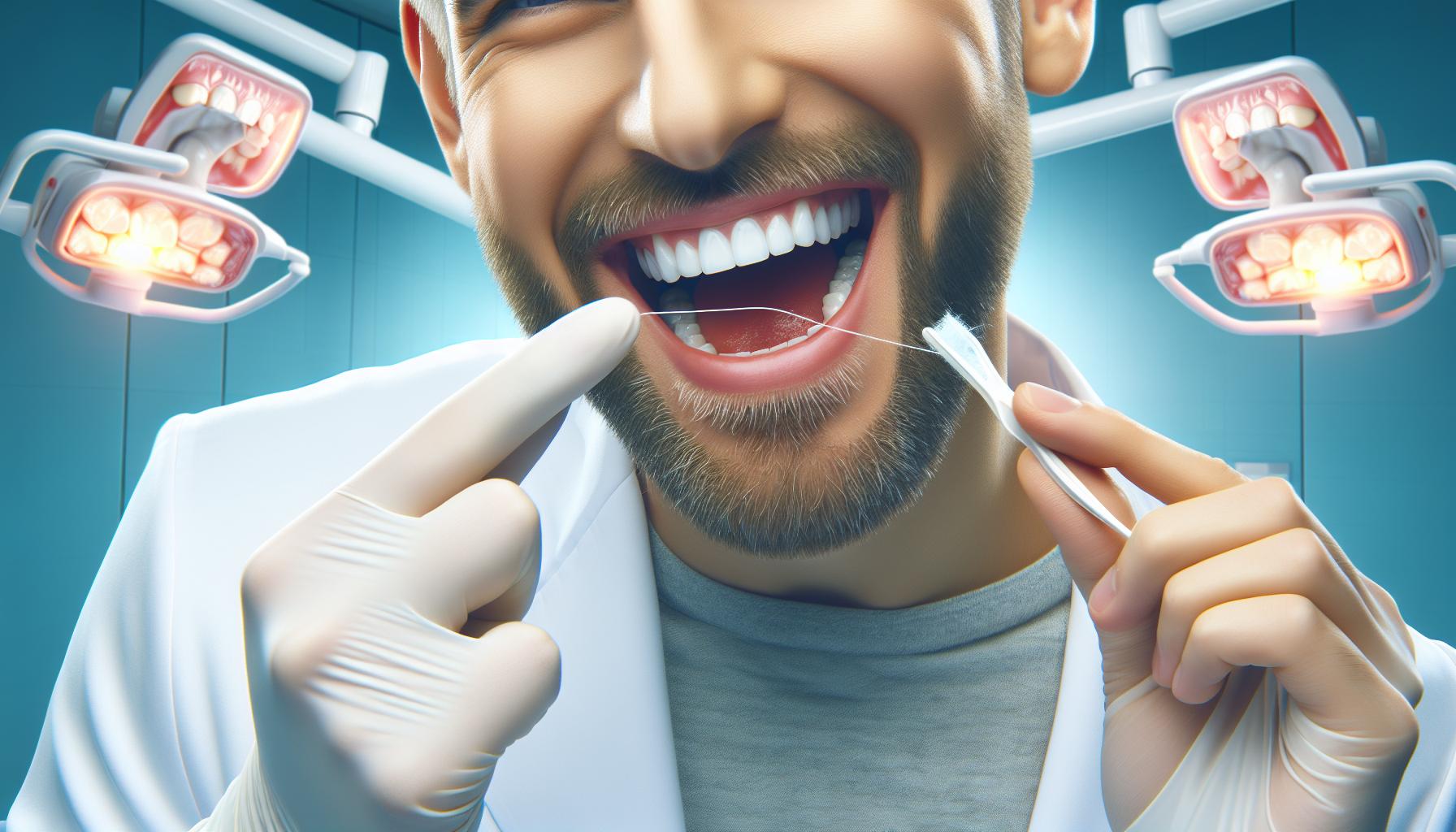
How to Get Stains From In Between Teeth: Interdental Cleaning Guide
Stains between teeth can be pesky, but with the right interdental cleaning techniques, you can remove them …
Flossing techniques define precise interdental debridement mechanics designed to disrupt proximal biofilm, prevent interproximal caries, and reduce papillary gingival inflammation.
Step-by-step guidance on the C-shape flossing technique to wrap each tooth and clean below the gumline safely.
Targeting stubborn interproximal chromophores using specialized flosses and micro-interdental brushes.
Brushing alone, regardless of toothbrush quality, cleans only approximately 60% of total tooth surfaces. The remaining 40% consists of the interproximal contact zones where adjacent teeth press tightly together. These sheltered spaces harbor the most virulent anaerobic periodontopathogens (such as Porphyromonas gingivalis) because they are shielded from salivary flow and oxygen.
Improper flossing mechanics—specifically snapping the floss downward with excessive force—creates painful gingival clefts (Stillman’s clefts) and causes irreversible tissue recession. Proper clinical flossing requires hugging the strand tightly against the curved line angle of each tooth in a ‘C’ shape, gently gliding subgingivally into the sulcular pocket, and scraping upward toward the incisal edge.
| Interdental Tool | Design Advantage | Optimal Clinical Application |
|---|---|---|
| Expanding Spun Floss | Expands in saliva to contact wide surface areas; highly absorbent | Best for standard contacts and patients prone to bleeding |
| PTFE Tape Floss | Ultra-slick, monofilament construction; zero shredding | Ideal for extremely tight interdental contacts and overlapping teeth |
| Interdental Brush (Proxy) | Cylindrical micro-bristles clean concave root surfaces directly | Superior for orthodontic braces, dental bridges, and open embrasures |
| Water Flosser (Oral Irrigator) | Hydro-pulsating jet disrupts subgingival colonies via fluid shear | Essential for dexterity limitations, deep pockets, and dental implants |
Never yank upward forcefully, as this can dislodge a dental crown or filling. Instead, let go of one end of the strand and pull the remaining length horizontally through the side of the teeth.
Bleeding is a classic sign of active gingivitis caused by bacterial biofilm accumulation. Consistent, gentle flossing removes this microbial irritant, allowing the gum tissue to firm up and stop bleeding within 7 to 10 days.
While water flossers are exceptional at flushing out loose debris and bacterial toxins from deep pockets, string floss or interdental brushes provide mechanical friction that is still needed to shear off stubborn plaque pellicle.